Shooting a Bullet into Liquid Steel: The Falcon Project
The story of Falcon began when Product Development Expert Gert-Jan Bex and IP Manager Guido Neyens from Heraeus Electro-Nite in Belgium decided to take initiative: “If we can measure temperature safely and fast inside a furnace filled with liquid steel, we should be able to measure oxygen as well”, Gert-Jan thought. After all, customers kept asking for exactly this kind of solution.
Why? Because in steelmaking, oxygen changes everything. It affects quality, yield, energy consumption, and process stability. Yet for decades, measuring it remained slow, dangerous, and partly dependent on estimation.
From the Lab into the Steel
As the team kept solving the technical quests, the true challenge remained: Will the probe actually work in a real electric arc furnace with real, hot liquid steel?
The Challenge
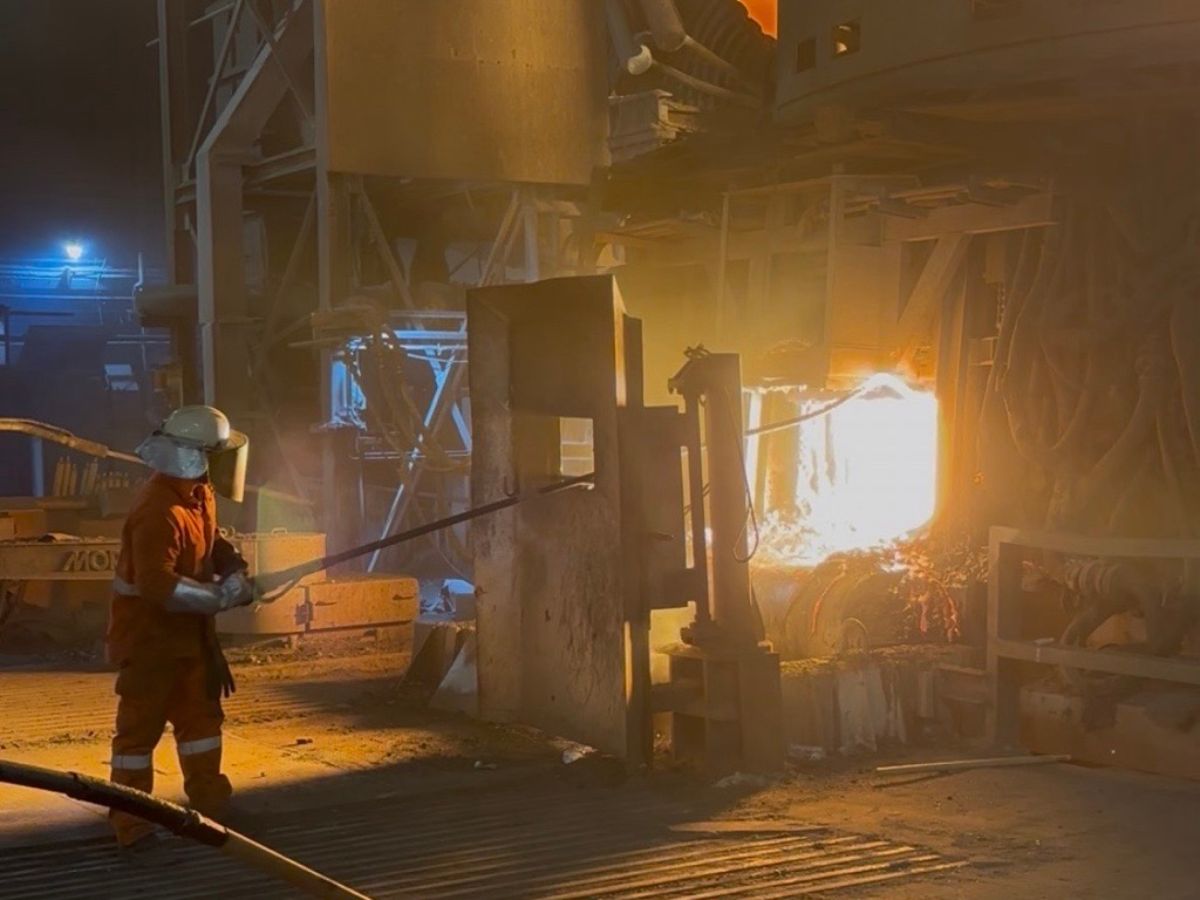
Old Method at the Open Furnace
Traditional measurements often require interrupting the process by opening the furnace and exposing workers to extreme harsh conditions when manual measuring. Therefore, only single oxygen measurements were applied, giving only limited insight into the process.
The Core Idea around the Probe
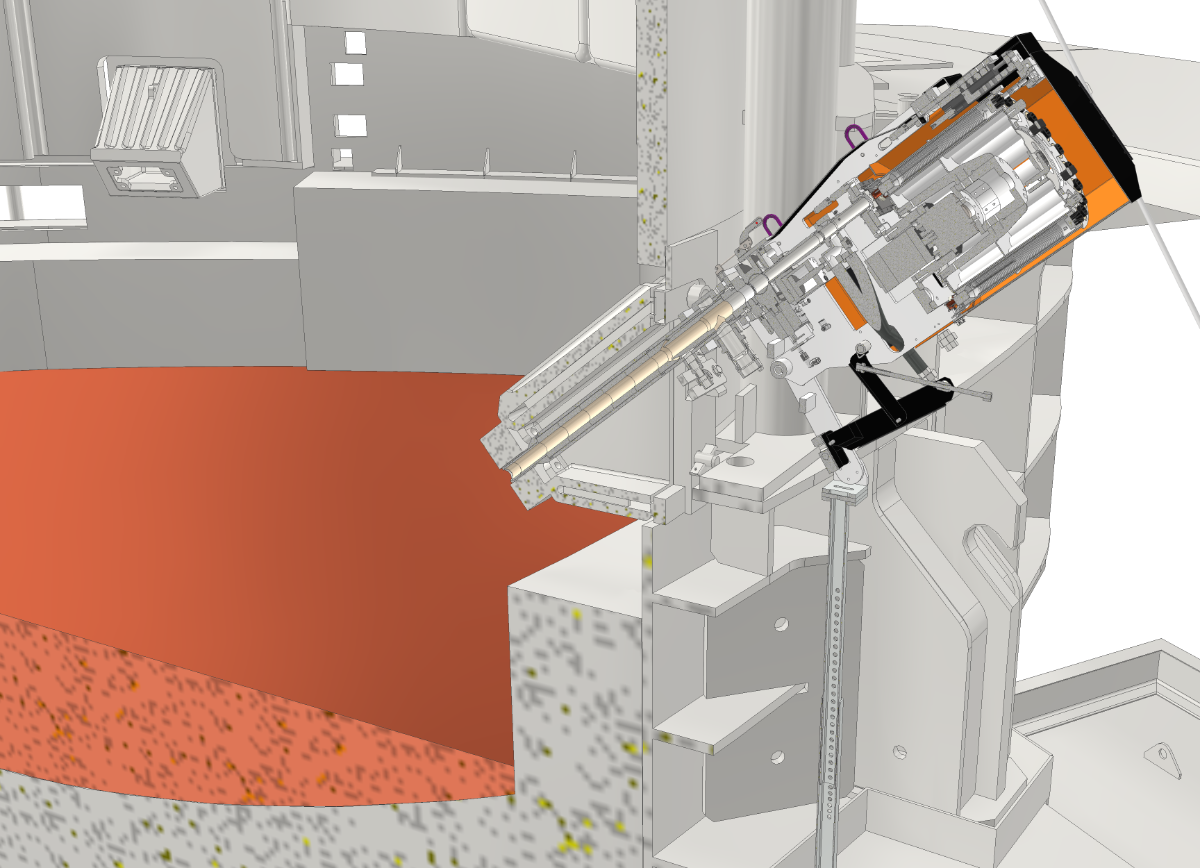
The solution that Falcon makes possible: launch a probe into liquid steel through the side wall of the furnace, capture the signal, and retrieve the data before the environment destroys the sensor.
From Estimation to Precision due to Data Signals
Being able to perfom multiple oxygen measurements gives operators real-time process insights for better efficiency and quality.
Turning Imagination into Innovation
Instead of building an elaborate system around the furnace, the team landed on the counterintuitive solution: “We decided to send the sensor directly into the process, capture the measurement immediately, and get back out before the conditions destroyed it”, Gert-Jan says.
Launching a probe through open air was one thing; firing it into liquid steel was another entirely. In January 2023, the team tested the concept in liquid steel conditions in their own induction furnace for the first time.
“I remember all of us starring at screen waiting for a measurement signal to appear”, Frank recalls. When the first signal appeared, the concept stopped being theoretical.
“The next question was whether it could work under real production conditions”, Technician Equipment Engineer Martijn Vromans says. “We drove to Paris for our first customer visit, and they were immediately interested. Together, we developed an installation concept that would use a small existing furnace opening as the entry point.”
Pressure, Fire, and Persistence
The months that followed were demanding in ways that had little to do with presentation slides or innovation language.
“Our tests required precise coordination between multiple people operating valves and timing sequences manually”, Martijn remembers. “Probes were still being refined one by one. Components had to survive temperatures and conditions that destroyed equipment routinely.”
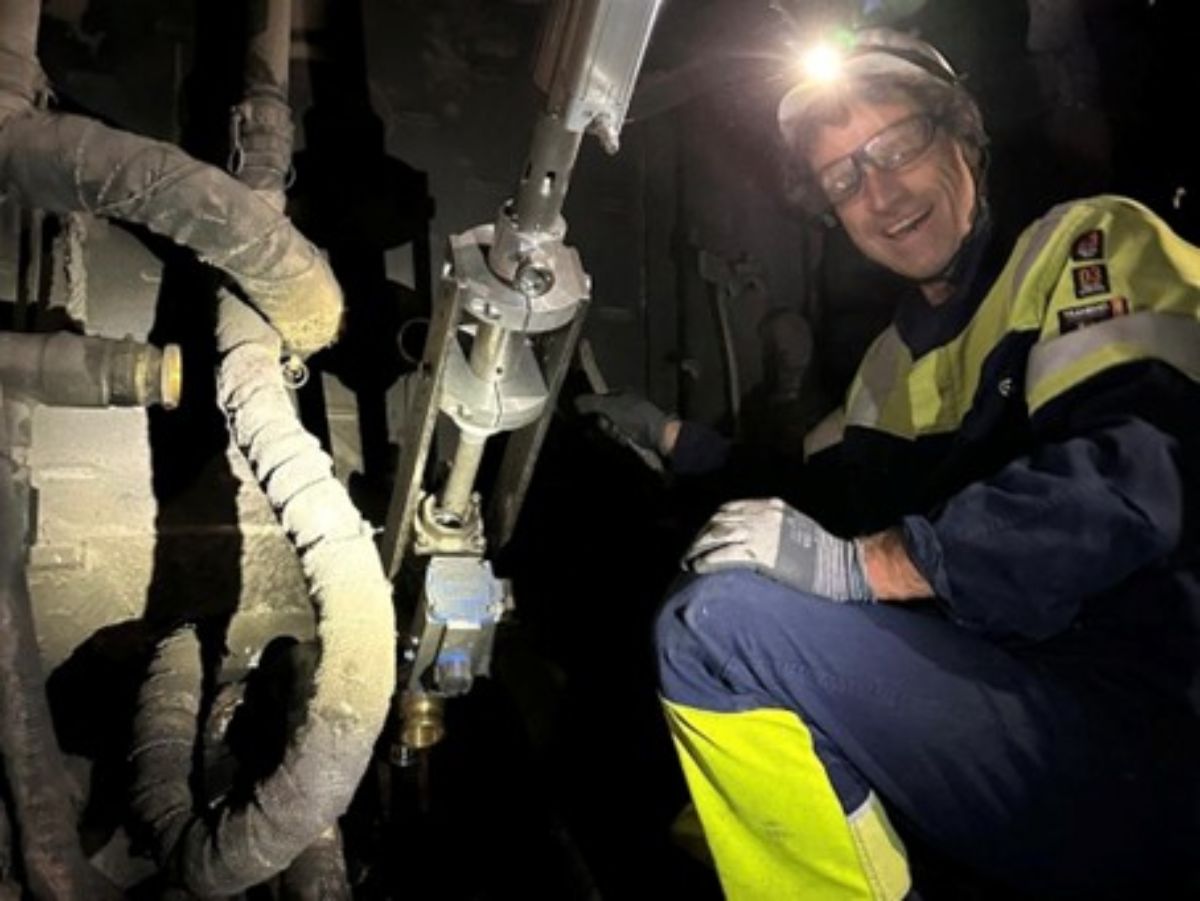
At one stage, the project suffered a major setback when a fire damaged parts of an installed system and destroyed critical hardware. The delay cost months of work.
What mattered afterward, several team members say, was less the technical recovery than the reaction itself. “There was never a moment where people wanted to quit,” Technical Designer Lode Vansteenwegen says. “Everyone just kept moving.” The team rebuilt the damaged systems, continued testing at other sites, and kept refining the design under real production conditions.
During that period, relationships with customers also changed noticeably. “Steel plants that had initially approached our technology cautiously began adapting their own infrastructure around it”, Gert-Jan recalls proudly. Entry ports were modified, air lines rerouted, installation spaces rebuilt. Operators who had once observed the tests from a distance increasingly treated the system as part of their everyday process.
By 2024, Falcon had evolved from a fragile prototype into a working production system.
From Prototype to Production
Proud as a Falcon
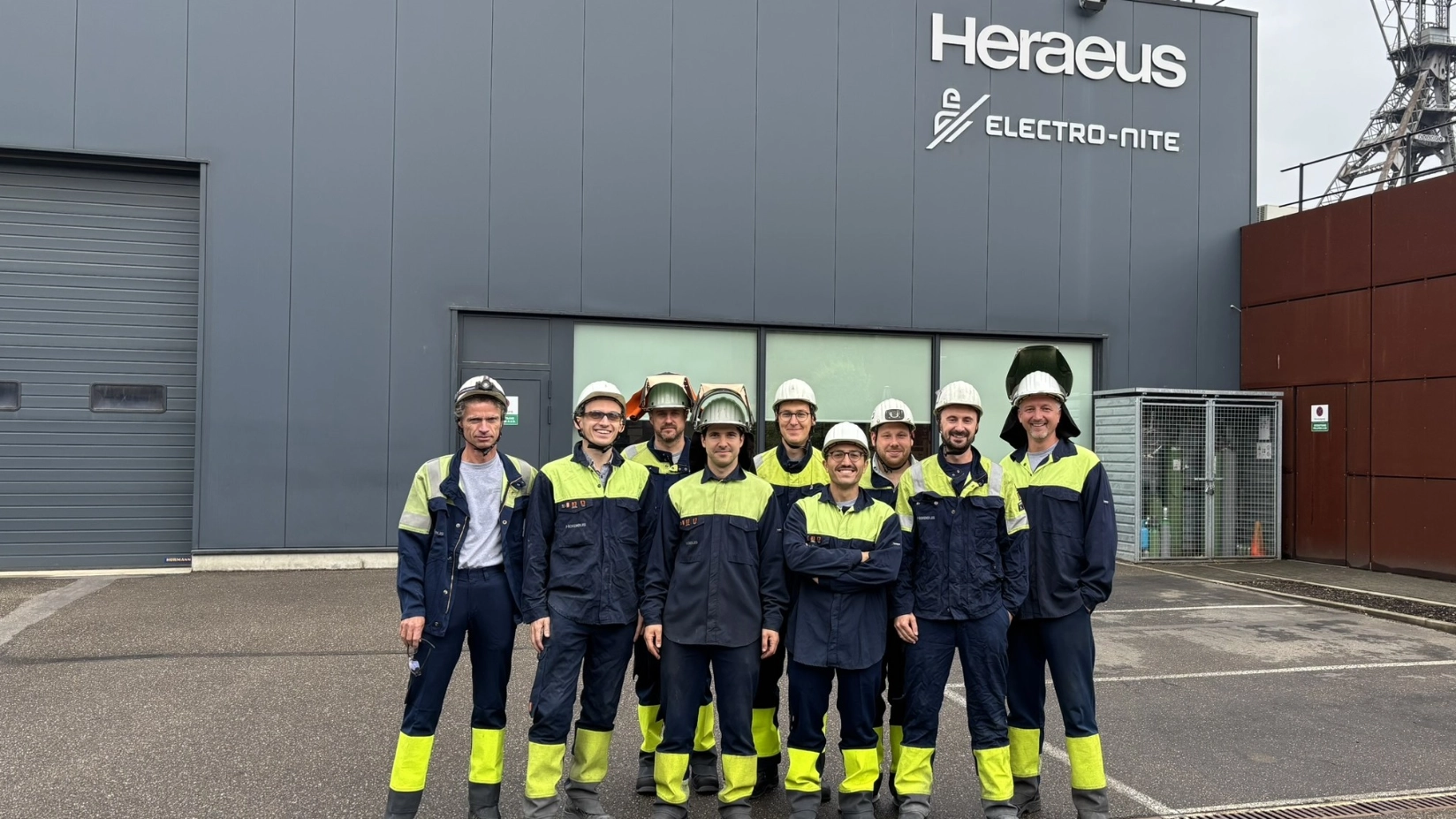
By 2026, the project had earned recognition inside and outside the company. But more importantly, it reflected the way the team itself had worked: trusting each other, adapting quickly, and continuing forward even when setbacks occurred.
In the end, Falcon became more than a measurement system. It became a story about people building something nobody was sure could be done.